
Practical CSMS Implementation in Energy: Prequalification to Close-Out
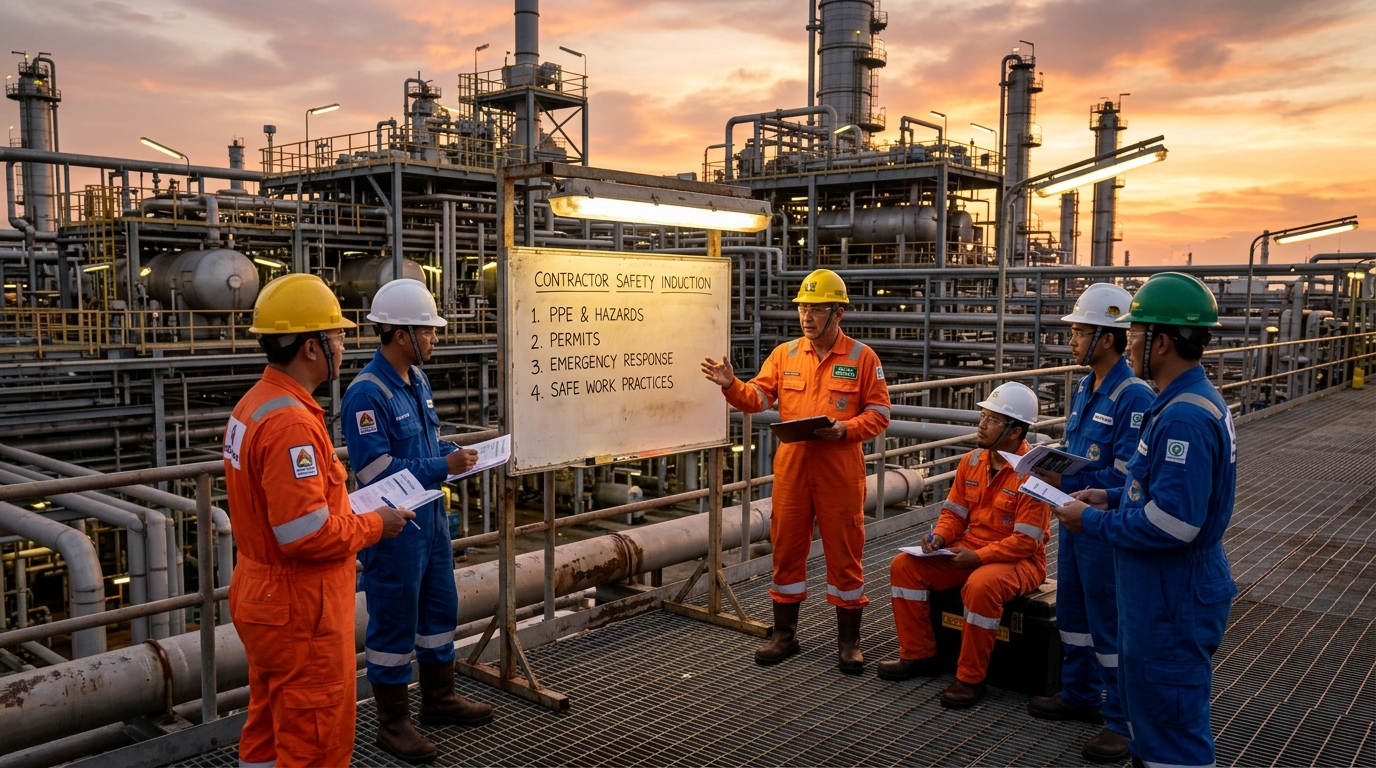
In oil & gas concessions, geothermal fields, and power utility sites, contractors and subcontractors carry out more than 70% of physical high-risk tasks. The Contractor Safety Management System (CSMS) serves as the mandatory framework governing vendor selection, execution, and performance verification.
1. Legal Framework: ESDM & SKK Migas Guidelines
Ministerial Regulation ESDM No. 32 of 2021 and SKK Migas PTK-005 require all upstream oil and gas production operators (KKKS) to enforce systematic contractor evaluation to mitigate catastrophic asset damage and loss of life.
2. The Six Phased Lifecycle of CSMS
A resilient CSMS implementation operates across six defined phases:
- Phase 1: Risk Assessment & Scope Categorization: Classifying the contracted work as Low, Medium, or High Risk based on operational complexity and environmental exposure.
- Phase 2: Prequalification (PQ): Rigorous evaluation of the vendor's historical TRIR, safety leadership track record, and ISO 45001 certification.
- Phase 3: Selection / Tender Stage: Reviewing the vendor's task-specific HSE Plan and bridging document submissions.
- Phase 4: Pre-Job Activity (Kick-off & Mobilization): Onsite audits of heavy machinery, personal competencies, and emergency response plans.
- Phase 5: Work in Progress (WIP Inspection): Active daily inspections, behavioral observations (STOP cards), and safety performance metrics.
- Phase 6: Final Evaluation & Close-Out: Rating vendor performance to determine eligibility for contract extension or future tender shortlists.
Conclusion
CSMS is not an administrative barrier designed to eliminate contractors; rather, it is a collaborative partnership mechanism ensuring that every contractor worker returns home safely at the end of each shift.